
Reliable ceramic fiber blanket production line – Process Stability You Can Count On
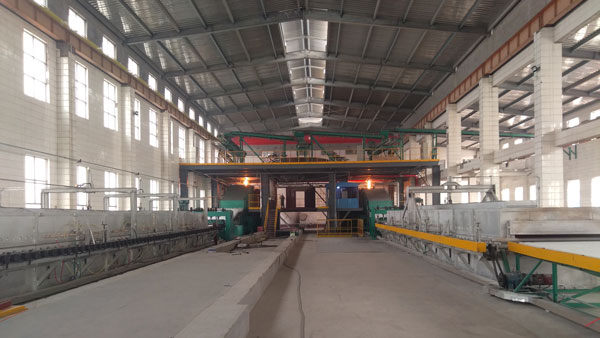
Look, I will be honest with you. I have seen too many buyers get burned.
They buy what looks like a good production line. The price is right. The salesperson talks a good game. Then the line arrives, and nothing works right. The furnace temperature jumps up and down. The fiber thickness changes every hour. The blanket comes out thick on one side and thin on the other. Customers start sending back your product. You lose money. You lose sleep.
I know this happens because I have fixed more than a few of those lines myself.
My name is from Jinyuan. We have been building aluminum silicate blanket production lines for over fifteen years. Not just selling boxes of metal. We engineer these lines for process stability. Because at the end of the day, process stability is what makes you money. Without it, you are just gambling.
In this article, I will show you what makes a truly stable aluminum silicate blanket production line. How each step affects your final product. What goes wrong when equipment is poorly designed. And how Jinyuan builds equipment that keeps running, keeps producing consistent blankets, and keeps your customers happy.
Why Process Stability Matters More Than Anything
Ask any insulation plant owner what keeps them up at night. The answer is almost always the same: inconsistent product quality.
Let me give you an example. One customer came to us after buying a cheap line from another supplier. Their melts canister process temperature would swing between 1650°C and 1900°C during production. The fibers came out thick at the start of a run and thin at the end. Their blankets had density variation of over 15% across just one roll. Their end users in the steel industry started rejecting shipments because insulation performance was no longer reliable.
That customer replaced their entire production line with a Jinyuan aluminum silicate blanket production line. The density variation dropped from 15% to under 4%. Now they run three shifts a day without a single rejection in six months.
That is what process stability does. It protects your product. It protects your reputation. And it protects your bottom line.
Every single piece of equipment in an aluminum silicate blanket production line matters. From the batching scale to the packaging winder. If any one of them is poorly designed, the whole line suffers.
The Melting Stage – Where Consistency Begins
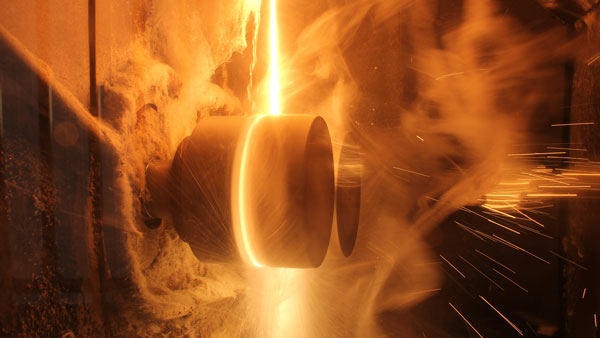
The melting furnace is the very first point of control in any aluminum silicate blanket production line. If your melt is not consistent, nothing after it will be consistent.
We use either electric resistance furnaces or natural gas arc furnaces, depending on your local energy situation. Both types are equipped with closed-loop temperature control systems that maintain melting temperature within a tightly controlled range of 1700°C to 1850°C.
But temperature control alone is not enough. You also need to prevent oxidation. Oxidized molten material produces fibers with lower heat resistance, which is a failure you cannot see until the blanket is already in the customer’s furnace.
That is why every Jinyuan melting furnace includes a nitrogen protection system. The gas flows continuously around the molten stream and the molybdenum discharge spout. Without nitrogen, the molybdenum spout oxidizes and needs replacement in months. With nitrogen, we have customers running the same spout for three years or more. That is process stability through careful engineering.
The batching system feeding the furnace is just as important. Our automated batching system uses screw feeders and weigh hoppers with ±0.3% accuracy. The system stores multiple recipes for different blanket grades. When the operator selects standard grade, high-purity grade, high-alumina grade, or zirconia grade, the system automatically adjusts the mixture. Changeover takes about thirty minutes, not hours.
Fiberizing – Control the Fiber, Control the Blanket
Once the raw materials are melted, the next critical stage in the aluminum silicate blanket production line is fiberizing. The molten material flows through the molybdenum spout and onto high-speed spinning discs. Centrifugal force throws the melt outward, and it cools into fine fibers as it flies.
The target fiber diameter in our aluminum silicate blanket production line is between 2 and 5 microns. Why is this range so important? Fibers that are too thick have higher thermal conductivity, so the blanket insulates poorly. Fibers that are too thin lack strength, so the blanket tears easily during handling and installation.
Our spinning system uses three or four discs in series. The first stage produces coarser fibers, and each subsequent stage refines them further. This multi-stage approach creates a mix of fiber lengths that gives the best needling result.
The discs themselves are custom-cast from specialized alloys. We have refined the metallurgy over more than a decade. The balance and geometry are tested on each disc before it leaves our factory. A poorly balanced disc vibrates, wears out bearings, and produces uneven fiber diameter. You will not see that vibration until the line is already running in your factory, and by then the damage is done.
So we test every disc before we mark it as finished. That is process stability built into our manufacturing, not something we ask you to fix after the sale.
Web Formation – Uniformity Starts Here
After fiberizing, the fibers are blown onto a moving mesh conveyor belt. Under the belt, a negative pressure suction chamber pulls the fibers downward so they settle evenly. The thickness of the web is controlled by adjusting the conveyor speed. Slower speed produces thicker blankets, and faster speed produces thinner blankets.
But even a well-designed suction chamber cannot fix a problem that comes from poor belt alignment. If the mesh belt runs crooked, the fiber web drifts to one side. When that happens, you waste material when trimming and the blanket density varies across the width.
That is why our web former includes an automatic edge tracking system. Sensors constantly monitor the web position, and the system adjusts automatically when drift occurs. Material waste drops by at least 5 percent. In a line producing 2,000 tons per year, that is 100 tons of extra product, not scrap.
The Needling Stage – Mechanical Locking Without Binders
This is where the aluminum silicate blanket earns its name. The fiber web passes through a double-sided needle punching machine. Needle boards above the web punch down. Needle boards below the web punch up. Thousands of barbed needles penetrate the web repeatedly, mechanically tangling the fibers together.
No chemical binders. No volatiles that burn off and smoke. Just pure mechanical entanglement.
The double-sided design is essential for stable blanket strength. Single-sided needling only tangles the top layers, leaving the bottom of the blanket weak and prone to delamination. Double-sided needling creates a three-dimensional fiber network that holds together under tension and compression.
We design the needle density to be adjustable because different blanket grades require different amounts of needling. Low-density blankets at 64 kg per cubic meter need less needling to stay flexible. High-density blankets at 160 kg per cubic meter need more needling and slower line speed to achieve the required density.
The needles themselves are consumable. That is a fact of production. But the needle boards and drive system must be built to handle frequent needle changes without losing alignment. Our needle looms use hardened alloy steel guide rails that maintain precision after hundreds of thousands of strokes.
If the guide rails wear out, the needle boards start moving out of alignment. Then the needles miss the fiber web or, worse, hit the belt. You can imagine what that does to production uptime.
We have seen cheap lines where the guide rails lasted only six months. Our design keeps the same precision for years.
Heat Treatment – Locking in the Properties
After needling, the blanket still contains residual organic lubricants from the fiberizing stage. If you do not remove those lubricants, the blanket will smoke the first time your customer heats it. That is not the kind of phone call you want to receive.
The blanket passes through a multi-zone heat treatment furnace. The first zones remove moisture and burn off organics. The later zones bring the blanket up to the temperature required for microcrystallization, which locks in the blanket’s heat resistance and reduces permanent linear shrinkage.
Multi-zone control is critical here. If you heat the blanket too quickly, it develops internal stresses. Later, when the customer uses it in their furnace, those stresses release and the blanket cracks or delaminates. Our furnace design includes independent temperature regulation for each zone so the blanket heats gradually and evenly.
The heat treatment temperature depends on the blanket grade. Standard grade blankets require lower treatment temperatures. High-alumina and zirconia grades require much higher treatment temperatures to achieve their thermal ratings.
All these temperature profiles are stored in the PLC control system, so the operator can switch between grades without guessing.
Cutting and Winding – Finishing Without Flaws
After heat treatment, the blanket runs through slitting knives that cut it to the required width. Precision slitting is important because an inconsistent width makes installation difficult for end users. If the blanket is 610 millimeters wide on one end and 608 millimeters on the other, it does not fit properly in furnaces that are designed for a standard dimension.
Our slitting system keeps tolerance to within plus or minus two millimeters across the full width. That consistency comes from the rigidity of the knife mounts and the precision of the guidance rails.
The blanket then moves to a cross cutter that cuts it to specified lengths. Standard lengths include 3.6 meters, 7.2 meters, and custom dimensions. The automatic winder includes tension control so the finished rolls are tight and even. Loose rolls are difficult to handle and do not pack efficiently for shipping.
Finally, the rolls are packaged in shrink wrap or woven bags depending on your customer’s requirements.
Why Jinyuan Focuses on reliable ceramic fiber blanket production line Process Stability
You can find many manufacturers of aluminum silicate blanket production lines. Some of them build decent equipment. But here is what I have learned after fifteen years in this industry.
Process stability is not something you add at the end. It has to be designed into every part of the line.
We do not copy designs from other manufacturers and hope for the best. Every component in our aluminum silicate blanket production line is designed with a specific purpose. The furnace insulation thickness is calculated to minimize temperature gradient while keeping shell temperature low. The spinning disc material is chosen to resist wear at high temperatures. The needling frequency range is matched to the density range our customers actually need.
And we test everything before shipment. Not a quick visual inspection, but actual operation. We run the line, measure output, check product dimensions, record energy consumption. Only when the numbers match our specifications does the line leave our factory.
When we install an aluminum silicate blanket production line at your site, we do not simply hand you a manual and leave. Our engineers stay for two to four weeks. They run the line with your raw materials, train your operators, and stay until you are producing good blankets on your own.
We also provide spare parts support. Common consumables like needles, heating elements, and belts are stocked and ready to ship within days.
What Customers Tell Us After Installation
I mentioned the customer in Pakistan who replaced a failing line with Jinyuan equipment. They produce about 1,500 tons of blankets per year, mostly for the local steel industry. Before they switched, they were spending more time fixing their line than running it. After we installed the new line, their uptime went from 60 percent to over 90 percent in the first three months.
Another customer in Saudi Arabia runs a Jinyuan line that produces blankets for petrochemical plants in the region. They have been running the same spinning discs for eighteen months without replacement because the furnace temperature control stays within parameters and the discs do not wear prematurely.
A customer in Russia bought a line for 2,000 tons per year. The building already had the utilities in place, so from contract signing to first production took just four months. That is what happens when you buy from a manufacturer that does not waste time on redesigning basic equipment for every order.
Common Problems with Unstable Lines
Let me tell you what we see when we get called in to fix lines from other suppliers.
Temperature cycling. The furnace control system is poorly tuned, so the temperature swings constantly. Fiber diameter varies through the day, and blankets change in density without any operator action.
Uneven web deposition. The suction chamber design is inadequate, so the fiber web is thicker in the middle than at the edges. When the blanket goes through needling, the thin edges are under-needled and weak.
Needle board misalignment. The guide rails have soft steel that wears unevenly. The boards rock back and forth instead of moving straight up and down. Needles break constantly, and the blanket surface has needle marks and holes.
Poor heat treatment zone control. The furnace only has one heating zone, so the blanket heats too quickly on the outside while the inside stays cool. Blankets come out of the line with different properties depending on their position in the width.
I have seen every one of these problems myself. In each case, the customer paid less for the line upfront but paid much more in downtime, scrap, and lost customers.
Maintenance Tips for Long-Term Stability
No matter how well a line is built, it still needs regular maintenance. Let me share some simple but effective practices that our most successful customers use.
Check needles daily. A broken needle can scratch the blanket surface and cause weak spots. Train your operators to inspect the needle boards at the start of every shift. Replace broken needles immediately.
Monitor furnace temperature logs. The PLC records temperature data. Review these logs weekly to see if the furnace is holding set points consistently. Small drifts can be corrected early before they affect fiber quality.
Clean suction chambers regularly. Fiber dust accumulates in the suction chamber over time. If you let it build up, airflow is reduced and web formation becomes uneven. A weekly cleaning takes fifteen minutes and prevents a lot of problems.
Keep spare parts in stock. Common broken parts include needles, heating elements, belts, and some sensors. We have seen customers lose three days of production waiting for a $50 part to be shipped. Keep a small inventory of high-failure items.
Document everything. Keep a production log that includes raw material batch numbers, furnace temperatures, line speeds, and product test results. When something goes wrong, you have data to trace back to the cause.
Final Thoughts
Choosing an aluminum silicate blanket production line is not just about the price on the quotation. It is about how reliably that line will run for the next five or ten years. It is about whether your product quality will be consistent enough to keep demanding customers in the steel, petrochemical, and power industries happy. It is about whether you will be the plant that delivers every order on time without excuses.
At Jinyuan, we build every aluminum silicate blanket production line for process stability. We design the components, assemble them in our factory, test them thoroughly, and then support you after installation. That is how we have stayed in this business for over fifteen years.
If you are planning to invest in a new production line, I invite you to contact us. Come to Guangdong and see our factory. Run a line with our engineers. Touch the blankets that come off the line. Ask the tough questions about temperature control, fiber diameter, and needling consistency.
Then decide.